
Is BC.Game Scam or Legit in Nepal? Evidence Review
A partial or delayed transfer can feel like proof that something is wrong. It is not, by itself, proof of a scam. Start with bank reconciliation: record the amount, time, transaction reference, receiving details and the exact web address used. Then compare those details with the account and payment instructions shown on the service. The evidence available for Nepal supports an amber assessment. An independent review records a foreign Anjouan register entry connected with bc.game, but no Nepal licence was located in the supplied packet. That foreign entry does not establish that the service is legal or authorised for people in Nepal.

What the amber assessment means
Amber means that important questions remain open. It is not a finding of fraud, and it is not an approval. The available record is enough to identify a relevant foreign licensing claim and a Nepal-facing regulatory concern, but not enough to confirm a Nepal authorisation, a complete operator identity, reliable withdrawals or a clean complaint history. The assessment is deliberately narrower than a simple “legit” or “scam” label.
The exact host matters. A page that resembles the service, uses a similar name or redirects through a different address must not automatically be treated as the same operator. A mirror was not treated as the exact operator domain for this review. Before signing in or paying, read the address character by character, including the ending after the final dot. Save a dated screen capture of the address and the payment page, without assuming that appearance proves ownership.
| Question | What is supported | What remains unknown |
|---|---|---|
| Is there a foreign licence record? | An independent review records an Anjouan entry identified as ALSI-202410011-FI1. | Whether the record currently covers the precise Nepal-facing service and host. |
| Is there a Nepal licence? | No Nepal licence was located in the supplied evidence. | Whether a later or separate competent-authority record exists. |
| Is the service a scam? | The packet does not establish fraud. | Withdrawal reliability, complaint resolution and the complete operator relationship. |
Host, operator and licence match
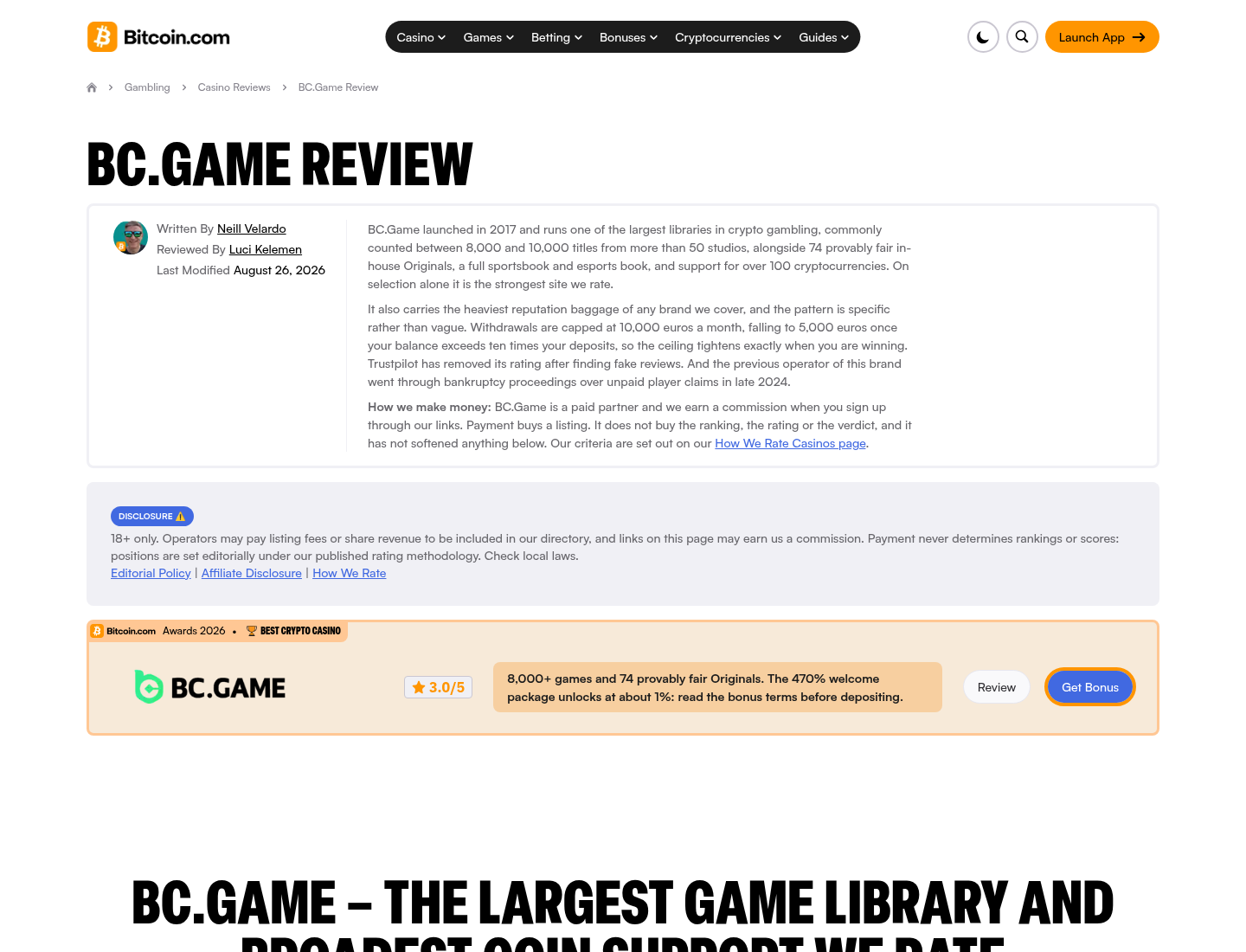
The supplied independent registry review associates the operator description “Twocent Technology Limited” with a foreign Anjouan licence record. That is a statement about the evidence reviewed, not an independently verified conclusion that the company controls every page using the name or every redirection encountered by a customer. Match three items before relying on the record: the exact host, the named operator and the licence identifier. If any one differs, record the difference rather than filling the gap with an assumption.
A licence number is not a universal permission. A foreign register entry may describe the regulator or jurisdiction that issued it, but it does not automatically answer whether a service may be offered, advertised, funded or used in Nepal. It also does not guarantee that a particular withdrawal will be processed. Keep the licence wording, the date checked and the address where it was found. If the operator supplies a different legal name or number at checkout, treat that as an unresolved mismatch.
The independent review is useful context, but it is not a Nepal licensing decision. The review also discusses limits around complaints and reputation. Those limits make it unsuitable as a substitute for a current primary record about Nepal. Our broader evidence methodology explains why identity, jurisdiction and date are assessed separately.
| Match point | Record to compare | Warning sign |
|---|---|---|
| Host | Type the address from the browser bar and retain the full host. | A near-spelling, unfamiliar ending or unexplained redirect. |
| Operator | Compare the legal name in the terms, cashier and support replies. | Different names appear without an explanation. |
| Licence | Compare the jurisdiction and identifier with the cited record. | A number is shown without a regulator, scope or matching entity. |
| Account | Compare the recipient name and reference with your bank record. | A request to pay a new person or unrelated account. |
Is it legal in Nepal?
The supplied Nepal evidence does not provide an online-operator whitelist. The official page for the Casino Rules 2082 is a physical-casino framework; it should not be converted into a statement that an online service is licensed. You can read the official Casino Rules 2082 text as a primary legal source, but its existence does not resolve the online question for this service.
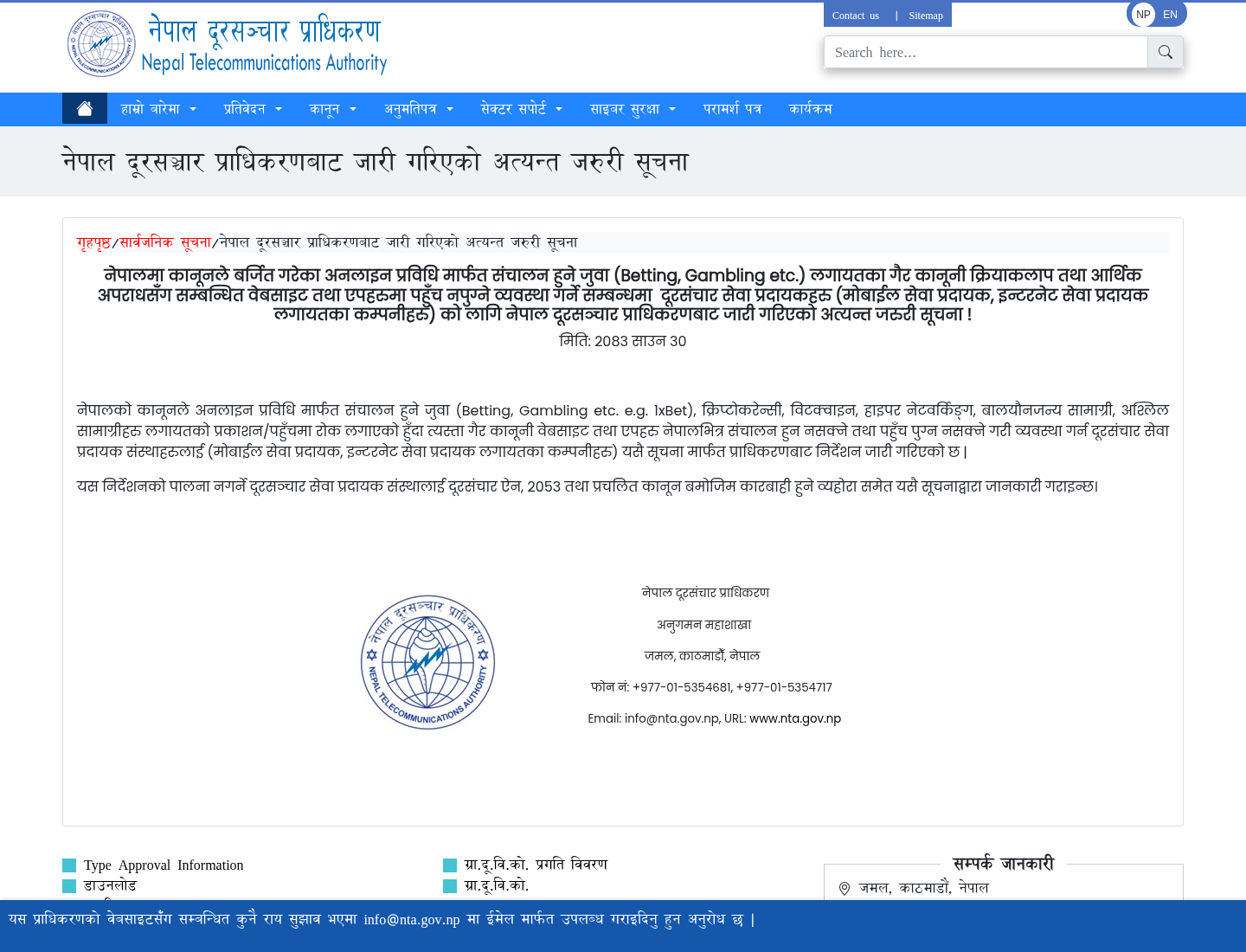
The Nepal Telecommunications Authority material directs service providers to prevent access to illegal betting and gambling sites and names 1xBet as an example. That is an important regulatory signal about illegal gambling access, but the supplied record does not name this service as an adverse finding. It therefore cannot be used to claim that this operator has been officially blocked or declared illegal. Read the NTA direction on illegal betting and gambling sites in its own terms.
The careful conclusion is limited: no Nepal licence was located in the packet, and the foreign licence record does not establish Nepal legality. Legal status can change and may depend on the service offered, the customer’s location, payment activity and current official decisions. Do not describe the service as Nepal-approved merely because it displays a foreign licence. For a general explanation of the distinction between an overseas record and local authorisation, see licence and law guidance.
Payments and a missing transfer
Payment availability should be verified at the time of use rather than inferred from a logo, a search result or a third-party description. The supplied packet does not establish a particular payment method, processing time, fee, currency, limit or successful withdrawal test. Those are unknowns, not promises. A payment method visible in one account or country may not be available to a Nepal account.
If money is missing or only partly credited, make a bank reconciliation file. Note the date and local time, amount and currency, transaction reference, sender or recipient details, status shown by the bank, status shown in the account and every support ticket number. Do not send a second payment merely because a message says the first one is pending. Ask the bank or payment provider whether the transaction was authorised, reversed, held, settled or sent to a different recipient.
Keep the service’s response, but separate it from the bank’s record. An operator statement can explain what the operator says happened; it cannot independently prove settlement. Redact passwords, one-time codes and unnecessary identity numbers before sharing documents. Never provide a recovery fee to an unverified person who promises to unlock funds.
| Stage | Action | Evidence to retain |
|---|---|---|
| Before paying | Check the exact host, recipient and displayed account name. | Address, payment instructions and timestamp. |
| After sending | Check the bank status and account ledger; do not duplicate the payment. | Reference number, amount, currency and status. |
| After a delay | Ask the bank or provider for a trace and request a written operator response. | Trace result, ticket number and correspondence. |
| After an unresolved dispute | Use the relevant complaint route and preserve the complete chronology. | Statement, screenshots, terms version and identity of the recipient. |
Withdrawals, KYC and account security
No withdrawal test was supplied, so no success rate or processing-time claim can be made. A withdrawal request may involve identity checks, source-of-funds questions, account restrictions or a review of activity. Those possibilities do not prove wrongdoing, but they can affect access to funds. Read the applicable terms before depositing and save the version or date available to you. If the account asks for documents, submit them only through the verified account channel and avoid sending more information than the stated check requires.
KYC means customer identification, not a guarantee that a withdrawal will succeed. Check whether the name on the account, payment instrument and identity document is consistent. Do not open duplicate accounts to bypass a restriction, alter documents or let another person use the account. Use a unique password and multi-factor protection where available. If the service asks for a new deposit to release an existing withdrawal, pause and verify the request through the bank and the service’s established support channel.
For each withdrawal, retain the request time, amount, destination, status and any stated reason for delay. A screenshot is evidence of what was displayed at one moment; it does not prove that the transfer settled. If a bank confirms that no payment was received, obtain its reference before asking support to investigate. This creates a clearer record than relying on a chat promise.
Scam, clone and impersonation checks
A clone may copy colours, wording, badges or a login screen. The supplied logo is an identification aid only and is not evidence of ownership or authorisation. Avoid following payment instructions from unsolicited messages. Open the service only through an address you independently checked, then compare the host in the browser bar before entering credentials. A lock icon confirms an encrypted connection, not the identity, legality or solvency of the operator.
Common risk signals include pressure to deposit immediately, a request to pay an unrelated individual, unexplained changes to payment details, a demand for a fee before releasing funds, or support that refuses to give a ticket number. Each signal requires verification; none alone proves a crime. Keep the original message and its headers where possible. Do not publish another person’s identity documents or expose private account information while warning others.
The independent review provides context about the foreign registry search and complaint or reputation limits. It does not validate every mirror, promotion or account outcome. You can consult the independent review recording the Anjouan search, while remembering that an editorial review is not a Nepal regulator decision.
Complaints and bank escalation
Begin with a written chronology. Include the exact host, account identifier, deposit or withdrawal reference, amount, date, requested remedy and copies of relevant replies. Ask for a specific answer: whether the transaction settled, where it was sent, what information is missing and when the next update is due. Avoid abusive language and do not send repeated tickets that could obscure the original record.
Escalate the payment side to the bank, wallet or card provider using its official dispute process. Ask whether it can trace, recall, freeze or challenge the transaction; the available remedy depends on the payment rail and status. A bank cannot necessarily reverse a completed transfer, and a complaint does not guarantee recovery. Report suspected impersonation or unauthorised access promptly, change reused passwords and secure the email account linked to the service.
For a structured record and jurisdiction-focused next steps, use the complaint guidance. Do not present an unresolved user report as an established fact. A complaint becomes stronger when it includes dated primary records from the bank, payment provider or competent authority. If gambling is causing financial or personal harm, the responsible-gambling information and urgent-help resources are more appropriate than chasing another deposit.
Evidence chronology and limits
This review uses three dated records checked on 31 August 2026. The NTA record is a primary Nepal regulatory source concerning access to illegal betting and gambling sites. The Law Commission page is a primary legal source for Casino Rules 2082 and is limited here to its physical-casino framework. The independent review records a search of an Anjouan register and discusses complaint and reputation limits. The roles are not interchangeable: a regulator direction, a legal text and an independent review answer different questions.
The chronology does not include a verified Nepal licence, a direct operator corporate filing, a completed withdrawal test, a bank settlement record or an official adverse decision naming this exact host. It also does not establish that every domain, mirror or payment recipient associated with the brand is controlled by the same entity. Those gaps explain the open-evidence basis for the amber signal. They should remain visible rather than being filled with assumptions.
| Checked record | Role | Permitted conclusion |
|---|---|---|
| NTA direction, 31 August 2026 check | Primary Nepal regulatory material | There is a regulatory direction concerning illegal betting and gambling access; it does not name this service in the supplied claim. |
| Independent review, 31 August 2026 check | Independent registry and reputation context | A foreign Anjouan entry is recorded; this does not establish Nepal legality or reliable withdrawals. |
| Casino Rules 2082 page, 31 August 2026 check | Primary legal text page | The cited framework concerns physical casinos, not an online-operator whitelist. |
How to correct the record
Evidence can change. If the operator or a competent authority supplies a current Nepal authorisation, record the issuing body, exact legal entity, precise host, scope and date. If a bank confirms settlement, retain the bank reference rather than a cropped account message. If a complaint is resolved, preserve both the original allegation and the dated resolution. A correction should identify what changed, which source supports it and whether the change affects the signal.
Readers should not rely on a copied badge, an undated screenshot or a social-media claim to establish legality. Send corrections through the contact route with source details and a concise explanation. Personal data should be removed unless it is necessary to verify the correction. The editorial record should distinguish a new primary record from an operator statement and from an unverified user report.
Careful conclusion for Nepal readers
Is this service a scam or legitimate in Nepal? The supplied evidence cannot support either absolute label. It records a foreign licence entry through an independent review, but no Nepal licence was located. Nepal’s official materials do not provide the missing online authorisation in this packet. The sensible position is therefore caution: verify the exact host and recipient, reconcile every transfer, protect KYC documents, and do not treat foreign licensing as local approval.
If you nevertheless choose to assess the service, start with a small, affordable exposure only after checking the current terms and payment destination; never gamble money needed for essentials. A commercial route is provided for readers who have completed their own checks: Continue the check.
Frequently asked questions
Is BC.Game licensed in Nepal?
No Nepal licence was located in the supplied evidence. An independent review records an Anjouan licence entry, but that foreign record does not establish authorisation in Nepal.
Does the amber signal mean the service is a scam?
No. Amber means the evidence is open and material questions remain unresolved. The packet does not establish fraud, but it also does not support a Nepal-licensed or fully cleared conclusion.
What should I do if a withdrawal is delayed?
Record the request, amount, date, status and reference; ask the service for a written response; and ask the bank or payment provider to trace the transaction. Do not make another payment simply to release the first one.
Does a foreign licence prove legality in Nepal?
No. A foreign licence may describe permission in another jurisdiction. It does not by itself prove that the precise host, operator or activity is authorised for customers in Nepal.
How can I check for a clone?
Compare the browser address character by character, confirm the legal name and payment recipient, avoid unsolicited links and preserve the address and payment instructions. A familiar logo or lock icon is not proof of ownership.
How can I submit a correction or complaint?
Keep a dated chronology and supporting bank or account records, then use the complaint or contact route. Separate operator statements and user reports from primary records, and remove unnecessary personal data before sharing.
Ministry of Culture, Tourism and Civil Aviation
The Rising Nepal
Semrush